


Ensuring Pool Safety with Sliding Glass Doors in Arizona
Updated: Jan 16
When it comes to pool safety in Arizona, most homeowners think about fences and gates. However, your sliding glass doors are also considered a pool barrier. They play a critical role in keeping your home compliant with local pool safety regulations.
At Slide Right, we specialize in repairing, upgrading, and maintaining sliding doors. Our goal is to ensure your home meets pool code requirements while staying functional, smooth, and secure. Whether you live in Phoenix, Peoria, Surprise, Glendale, Buckeye, or anywhere across the Valley, understanding how pool barriers apply to your home can help you stay safe and compliant.
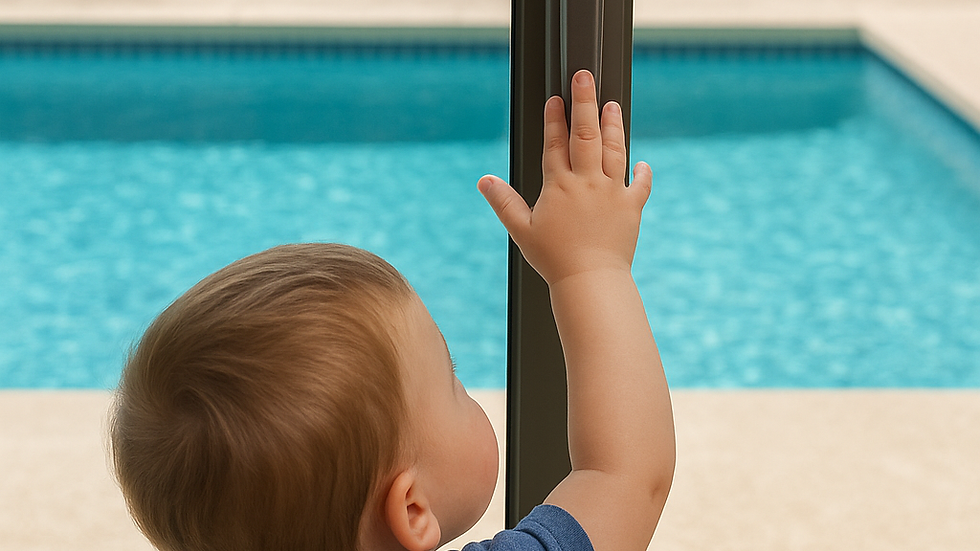
Why Sliding Doors Matter as a Pool Barrier
Arizona cities require homeowners to maintain effective pool barriers to protect children and prevent accidental drownings. These barriers aren’t limited to fences. Any door that grants access to a backyard with a pool is considered part of the pool barrier system.
This means your sliding glass door must meet specific standards, which typically include:
Self-closing mechanism that automatically shuts the door
Self-latching hardware positioned at a compliant height
Fully functioning rollers and tracks to ensure smooth operation
Secure screens (if applicable) that don’t interfere with closing
Properly aligned frames so the door seals and latches correctly
If your door sticks, drags, bounces open, or won’t latch, it may no longer meet the requirements for a safe pool barrier.
Common Pool Barrier Upgrades for Sliding Doors
Here are the most common services we provide to bring your door into pool compliance:
✓ Installation of Self-Closing Devices
A self-closing mechanism ensures the door shuts automatically—an essential part of any pool barrier.
✓ Self-Latching Hardware at Code-Compliant Height
We install or repair latches so they engage every time the door closes.
✓ Roller Replacement for Smooth, Reliable Operation
Worn-out rollers can make the door difficult to close or cause it to reopen unexpectedly.
✓ Track Repair or Replacement
A damaged track can prevent the door from closing fully, compromising the pool barrier.
Signs Your Sliding Door Is Not Pool-Barrier Compliant
If you’re experiencing any of the following, your pool barrier may need attention:
Door slides too hard
Door won’t latch every time
Door does not close fully on its own
You have to lift or push the door to align it
Closing the door causes it to bounce back open
Hardware is loose, worn, or non-functioning
Even small issues can make your home non-compliant—and unsafe.
Why Proper Pool Barriers Matter
Arizona leads with some of the strictest pool safety regulations because they work. A secure and functional pool barrier saves lives. Children move quickly, and a faulty sliding door can create an unexpected access point to the backyard. By maintaining a code-compliant sliding door barrier, you’re protecting your family, visitors, and neighborhood children.
Slide Right: Your Local Pool Barrier Experts
We work with homeowners, real estate agents, home inspectors, and pool companies to ensure sliding doors meet Arizona’s various city-specific pool barrier requirements. Whether you need a quick repair, a full upgrade, or an inspection to determine if you're compliant, Slide Right is here to help.
Smooth operation + automatic closure + secure latching = a safe, reliable pool barrier.
Contact Us Today!
If you're ready to enhance your home's safety, reach out to us! We can help you with all your sliding door needs, ensuring you have a compliant and functional pool barrier. Your peace of mind is just a call away!



Comments